Being a specialist in 4-stroke engines means we can advise you on the best upgrades and bang-for buck solutions for your 4-stroke engine from GX160/GX200 200cc engines right up to 400cc GX390’s and predator versions. But if you’re chasing power, you’ll need to ensure your engine is strong where it counts – the Connecting Rod is the key component to engine lifespan as it’s often the first to fail. Anything over the stock 3600 RPM limit is dangerous with a stock rod. The higher the average RPM, the higher the chances of failure. Take out your governor and you’ll reach these RPM speeds very quickly indeed.
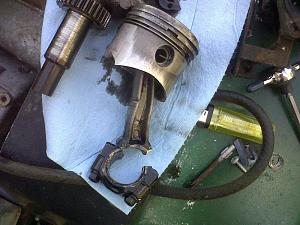
WHY DO STOCK RODS FAIL?
With your stock rod, the only thing between the aluminium rod and your steel crankshaft journal is a thin film of oil. This in itself isn’t bad – oil is always required at this interface even with an aftermarket rod, it’s just that at high speed the oil bleeds back out of the tiny hole in the rod, leaving the shaft and rod un-lubricated. It gets hot and seizes, causing catastrophic engine failure and taking the block, piston and head with it. Never a good look.
The Casting Lottery – the second way stock rods fail is by literally splitting apart. This can happen when air bubbles in the casting fall in just the wrong spot and weaken the rod. The forces pulling and pusing the rod during the cycles will snap the rod in half, causing catastrohpic engine failure. This generally won’t happen at governed speeds like 3500rpm or less, but at higher speeds which the engines weren’t designed for, the weakness of the rod becomes apparent. When aluminium is cast sometimes small impurities or air is caught in the molten aluminium. It’s trapped inside, with impurities causing reactions which in turn cause gas. This leaves little bubbles of air throughout the internal sections of the casting – stuff you can’t see – which causes weak points in the casting.
WHY DOES AN AFTERMARKET ROD ALLOW HIGH RPM WITHOUT FAILURE?
Some people may think that the rod itself is stronger, because it’s billet aluminium – and it is, but that’s not the main reason rods fail (although it is one reason – and it’s important not to forget the stock rods are not strong and can actually break) – the main reason is the lack of lubrication at high speed. All rods including aftermarket rods suffer from this, but the aftermarket rods are designed to hold more oil in, rather than let it bleed out. Where the aftermarket rods really helps is when the oil eventually bleeds out completely during continual high RPM work (like speedway, or down a long straight) when the special sacrificial slipper/sleeve bearings wear slightly and provide additional lubrication. You’ll need to replace them over time as they do their job by sacrificing themselves at these rare moments in time, but that sure beats replacing a whole engine!
We’ve got you covered and stock Connecting Rods for GX200, Predator, GX270, GX390 and Vangard 6hp engines ready to ship using our fast same-day dispatch! Plus we’ve got replacement bearings in stock too!
You can get them here:
GX200: /?s=crbarc1&post_type=product
PREDATOR: /?s=crbarp1&post_type=product
GX270: /?s=CRBA270&post_type=product
GX390: /?s=CRBA390&post_type=product
Vangard 6hp: /?s=CRBMIT&post_type=product
GX200 265 Cam: /?s=CMA265&post_type=product
And if you’re looking at the best pathway to build a quick GX200 check out our popular guide here: